

Serving Downtown Littleton, Colorado · Open 24/7
Mold Removal in Downtown Littleton, CO
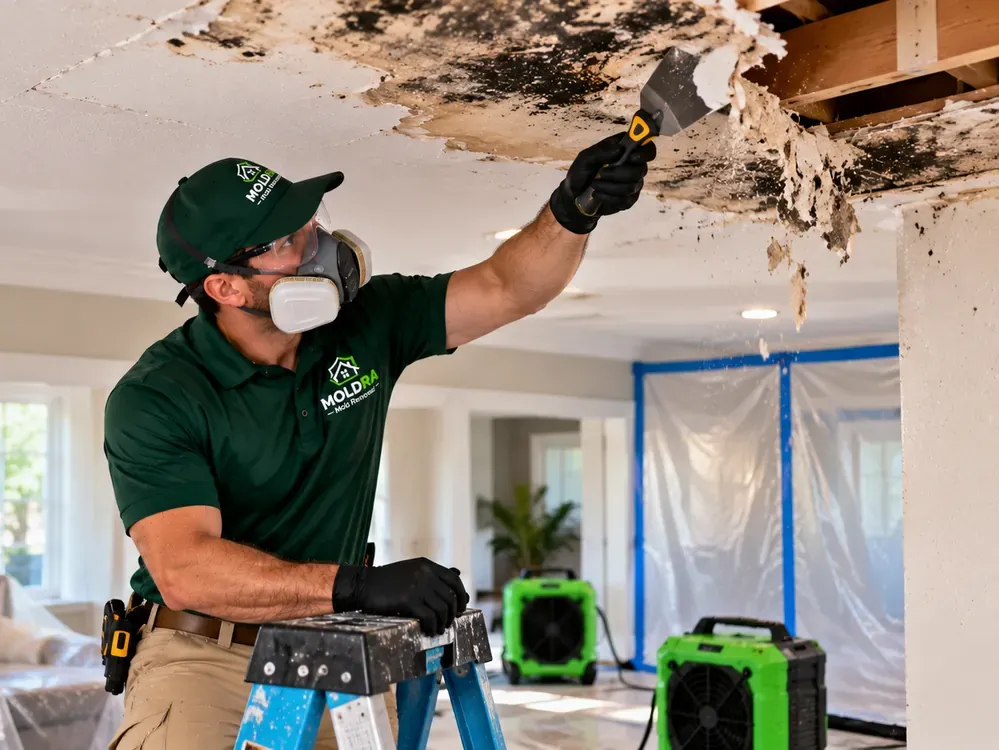
Moldra provides mold removal in Downtown Littleton, CO, for historic houses, old cellars and the shops and offices along Main Street. Since 2012 our Littleton team has found the leaks and damp foundations behind the mold in older buildings, removed it with containment and HEPA filtration, and checked the area before handing it back.
- Available 24/7
- Local Littleton team since 2012
- Clear written estimate before work starts
Get a fast estimate
Tell us what you are seeing. We call you back, 24/7.
Mold Remediation Downtown Littleton
- Since 2012 14+ years in Littleton
- Open 24/7 A person answers day and night
- Local office W Cross Dr, Littleton, CO
- Source found first Moisture meters and thermal imaging
- HEPA & containment Negative air on every removal
- Clearance checked Lab testing when you need proof
Local know-how
Mold removal in Downtown Littleton, CO: what we see
Downtown Littleton is the oldest part of the city. Main Street grew up as a small farming and railroad town in the late 1800s, and many of the houses on the streets around it are well over a hundred years old. Littleton is also the county seat of Arapahoe County, so the area mixes homes, government buildings, restaurants and small offices.
Older buildings were not designed for finished basements or modern bathrooms. Stone and brick foundations let moisture through, cellars were meant to stay cool and damp, and decades of plumbing changes leave hidden joints inside walls. The South Platte River corridor just to the east also means some lower lots stay damp after wet springs.
Serving all of Downtown Littleton
- Historic Main Street
- Streets around the Littleton-Downtown light rail station
- Near Littleton Blvd
- Near the South Platte River trail
- Older blocks west of Main Street
Our office at 9800 W Cross Dr is about 15 minutes from Main Street.
Mold problems we see in Downtown Littleton
Stone and brick foundations
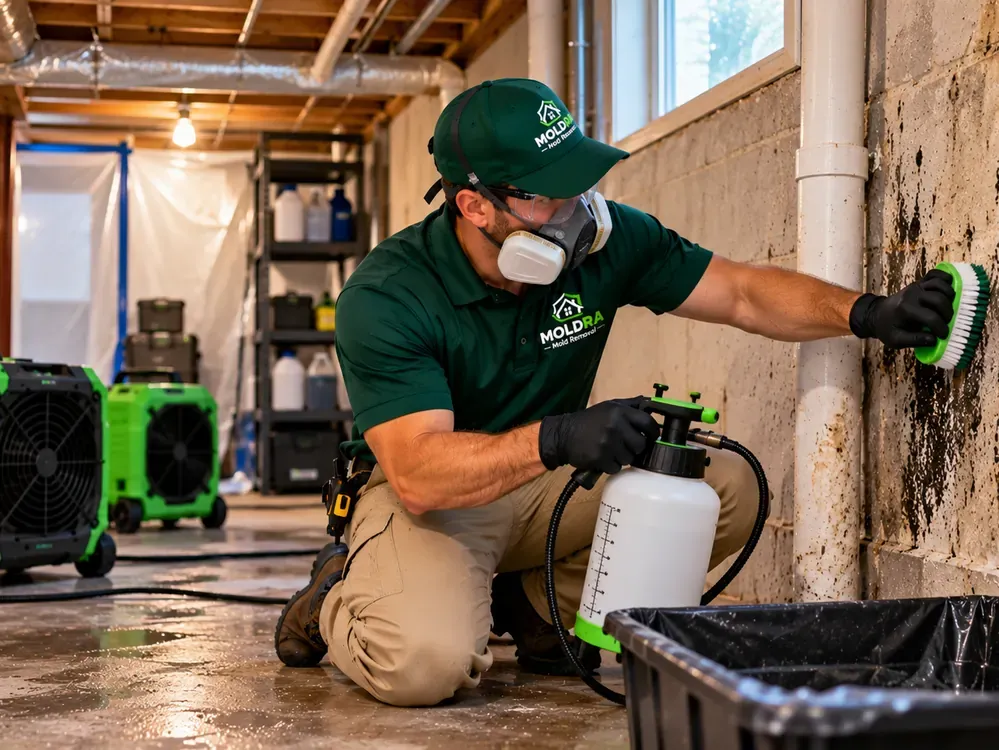
Old masonry foundations wick ground moisture into basement walls, and mold grows on anything stored or built against them.
Cellars turned into living space
When an old cellar gets drywall and carpet without a vapor barrier, the damp has nowhere to go.
Old plumbing in plaster walls
Galvanized and cast iron pipes corrode slowly. Leaks behind plaster can run for months before a stain shows.
Shared walls on Main Street
In attached commercial buildings, a leak next door can show up as mold in your space. We document it for owners and tenants.
Why it matters
Why Downtown Littleton homes need professional mold removal
Mold is a sign that water is reaching a part of your home it should not. These are the reasons Downtown Littleton homeowners call us instead of trying a quick fix.
Old foundations let water in
Stone and brick walls pass moisture through.
Hidden old plumbing
Joints inside plaster walls leak quietly.
Careful methods
Historic materials need the right approach.
Shared walls
Neighbors on Main Street share moisture problems.
Services in Downtown Littleton
Most requested in Downtown Littleton
Mold Removal & Remediation
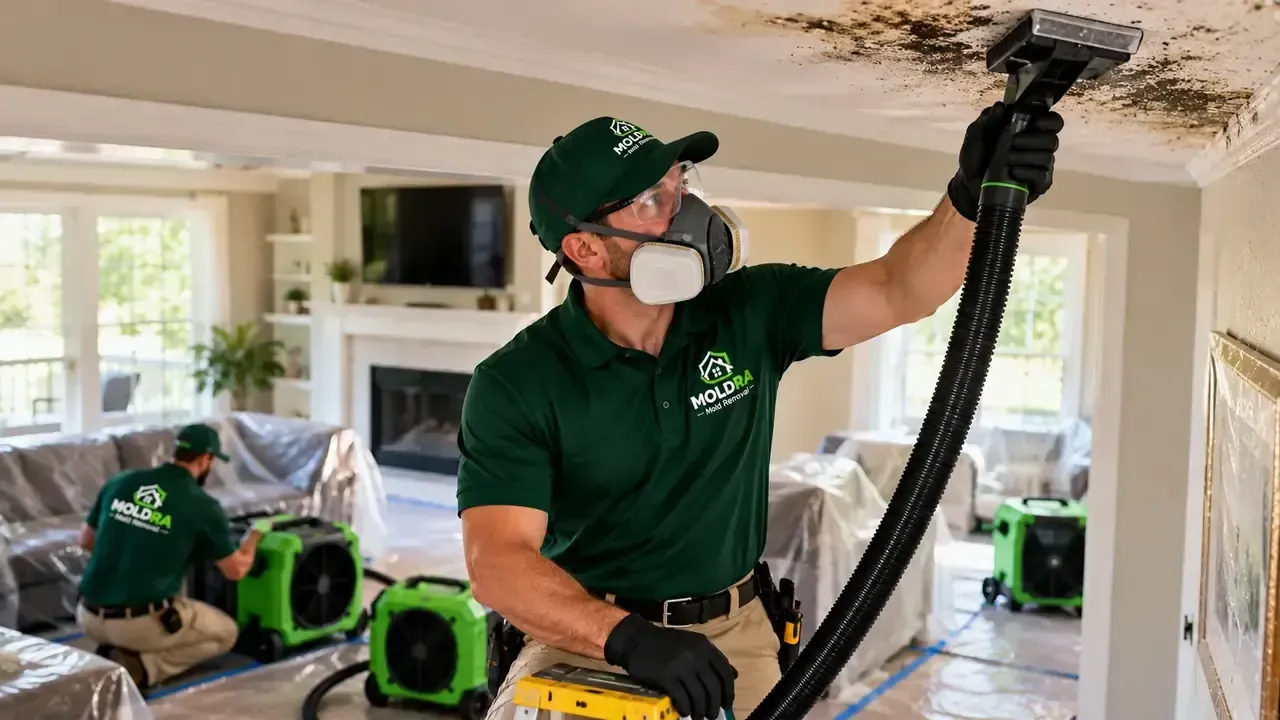
Full remediation, from inspection to clearance testing.
Learn more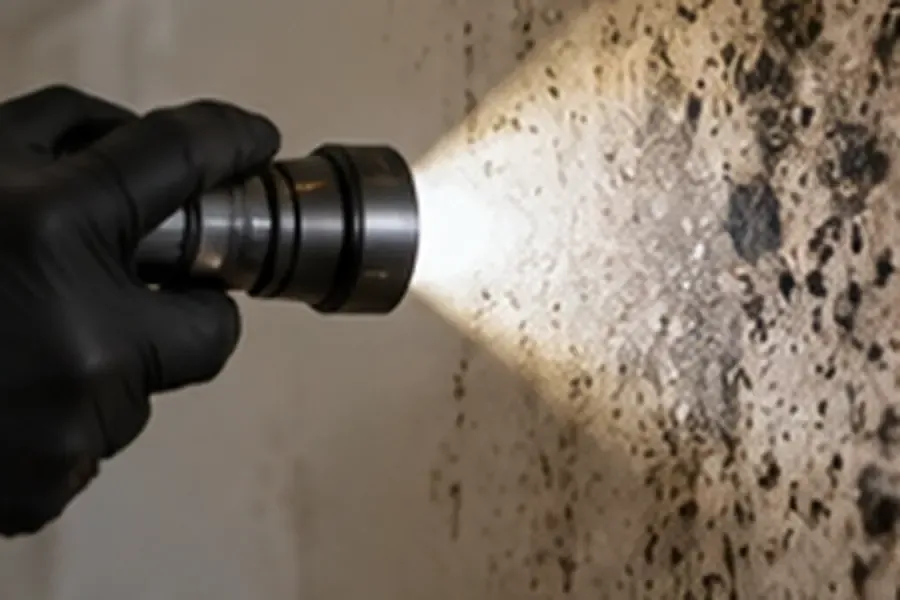
Inspection & Testing
Moisture mapping, thermal imaging, and air or swab samples analyzed by a lab.
Learn more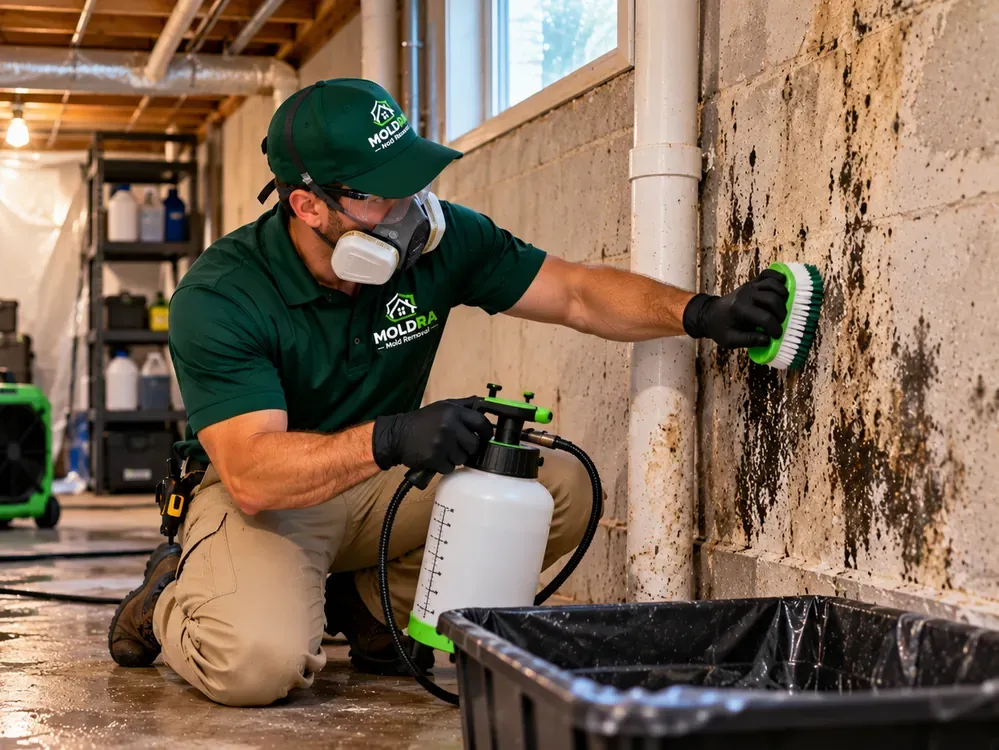
Basement Mold Removal
Finished and unfinished basements, behind drywall, carpet and framing.
Learn more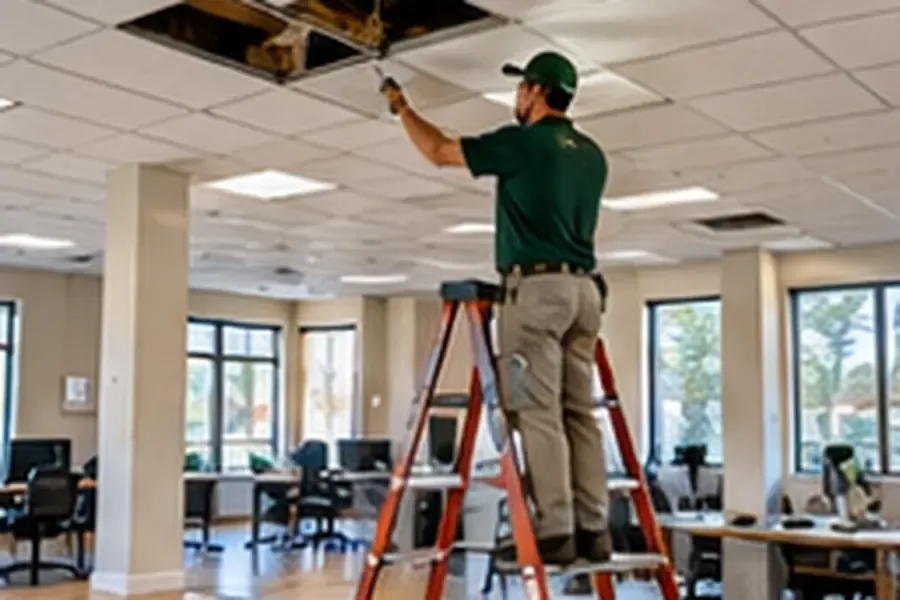
Commercial Mold Remediation
Offices, retail, rentals and HOAs, with clear scopes and documentation.
Learn moreOur process
How we remove mold in Downtown Littleton
Downtown Littleton homes are among the oldest in the city, so our process is adjusted for stone and brick foundations, old cellars and plaster walls.
-
Step 1: Inspection & assessment
We inspect your Downtown Littleton home with moisture meters and thermal imaging to find visible and hidden mold and the water behind it. Air or swab samples are added when they answer a real question. You get a written scope before work starts.
-
Step 2: Containment & air filtration
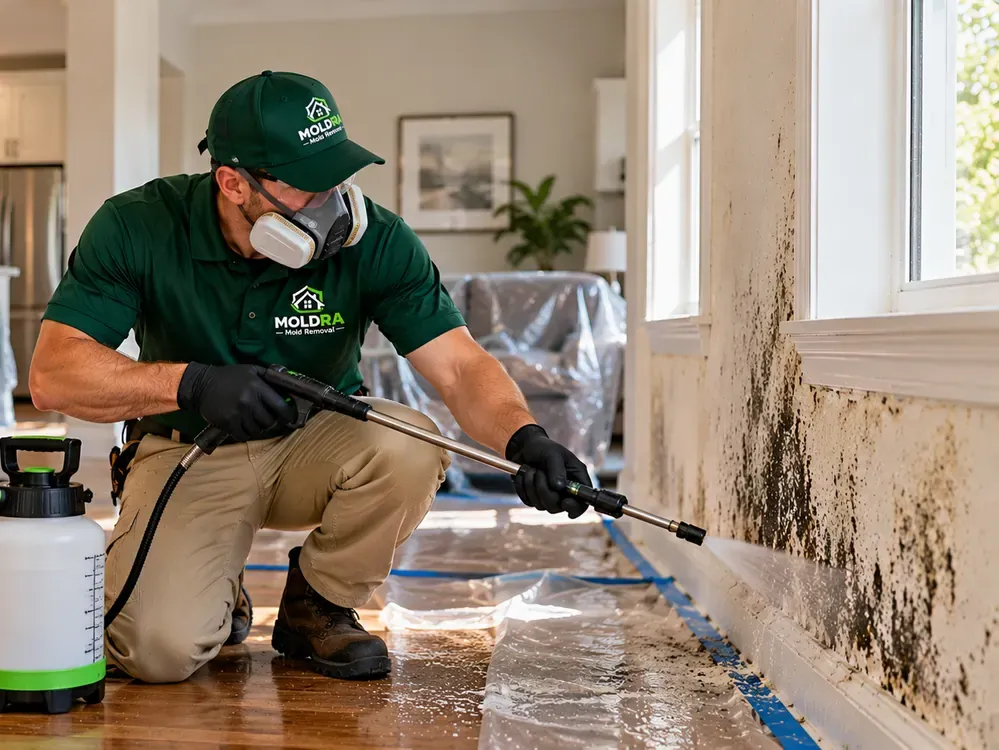
The work area is sealed with plastic barriers and a zipper door, and negative air machines with HEPA air scrubbers keep spores out of the rest of the house.
-
Step 3: Removal & treatment
Moldy drywall, insulation, carpet and pad are removed and bagged inside containment. Framing and concrete are HEPA vacuumed, cleaned and treated with an antimicrobial.
-
Step 4: Structural drying & dehumidification
Dehumidifiers and air movers dry the structure, and we log readings until it is dry. Stone and brick foundations hold moisture, so we dry and measure carefully and do not seal walls that need to breathe.
-
Step 5: Post-remediation verification
Before rebuilding, we confirm the area is clean, dry and back to normal, with clearance testing when you want lab proof.
-
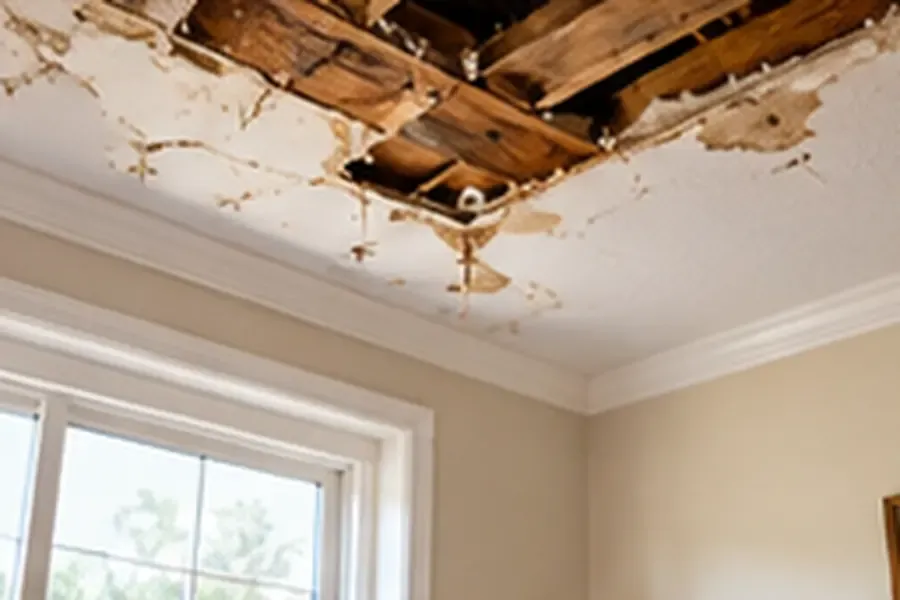
Step 6: Prevention & restoration
We fix the moisture cause so the mold does not return. Typical fixes here are drainage away from old foundations, dehumidifiers in cellars and replacing hidden plumbing joints in old walls.
Local know-how
Understanding mold in Downtown Littleton, Colorado
Every neighborhood has its own mix of terrain, home ages and water problems. Here is what drives mold in Downtown Littleton.
The oldest part of Littleton
Main Street grew up as a farming and railroad town in the late 1800s, and Littleton is the county seat of Arapahoe County. The South Platte River corridor to the east means some lower lots stay damp after wet springs.
Century-old houses
Many homes near Main Street are over a hundred years old, with stone or brick foundations, cellars and plaster walls. They were not built for finished basements or modern bathrooms.
What that means for mold
Mold often grows in cellars turned into living space, behind plaster near old plumbing, and in shared walls of older commercial buildings on Main Street.
Health and the climate
Littleton gets only about 16 inches of precipitation and about 66 inches of snow in a typical year (Western Regional Climate Center data), and the air is dry most of the time. So mold here almost always traces back to one water source. The CDC notes damp, moldy rooms can cause stuffy nose, wheezing and eye or skin irritation, with stronger reactions for people with asthma or allergies.
Nearby, we also serve Southwest Littleton, Columbine Valley and Bow Mar.
From our blog
Mold guides for Littleton homeowners
Plain-English answers from our team about spotting mold, testing and what removal involves.
-
 Signs & causes
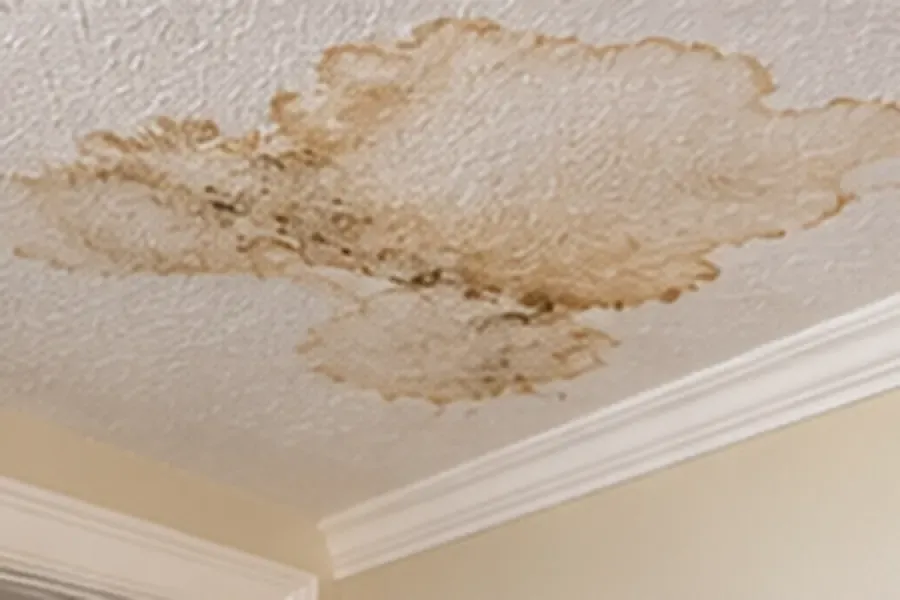
Why Littleton Homes Get Mold (Even in a Dry Climate)
Colorado is dry, so why do Littleton homes get mold? Snowmelt, storms, finished basements, swamp coolers and frozen pipes. The local causes and how to prevent them.
Read the guide -
 Signs & causes
7 Signs of Mold in Your Home (and Where It Hides)
The first signs of mold in a house: musty smells, stains, peeling paint, allergy symptoms and more. Where hidden mold grows in Littleton homes and what to do.
Read the guide -
 Inspection & testing
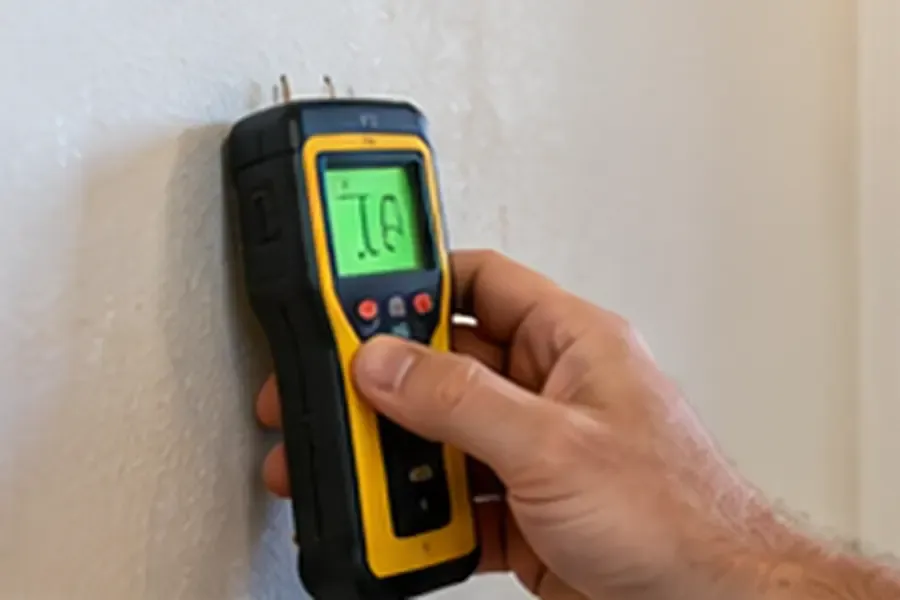
Is Mold Testing Worth It? When to Test and When to Skip It
When professional mold testing is worth the money, when it is not, how air and swab tests work, and why DIY kits are misleading. Honest advice from Littleton mold pros.
Read the guide
Service areas
We serve these areas in Littleton, CO
From our office on W Cross Dr we cover all of Littleton and the neighborhoods around it. Pick your area to see the mold problems we see there most.
- Littleton
- Downtown Littleton
- Southwest Littleton
- Ken Caryl
- Dakota Ridge
- Columbine
- Columbine Knolls
- Columbine Valley
- Bow Mar
- Marston Lake
- Chatfield
- Roxborough
- Sterling Ranch
Talk to a mold specialist near Downtown Littleton.
Tell us what you are seeing. We will explain the next step, whether that is a test, an inspection or removal.
- Available 24/7
- Local Littleton team since 2012
- Clear written estimate before work starts
Location
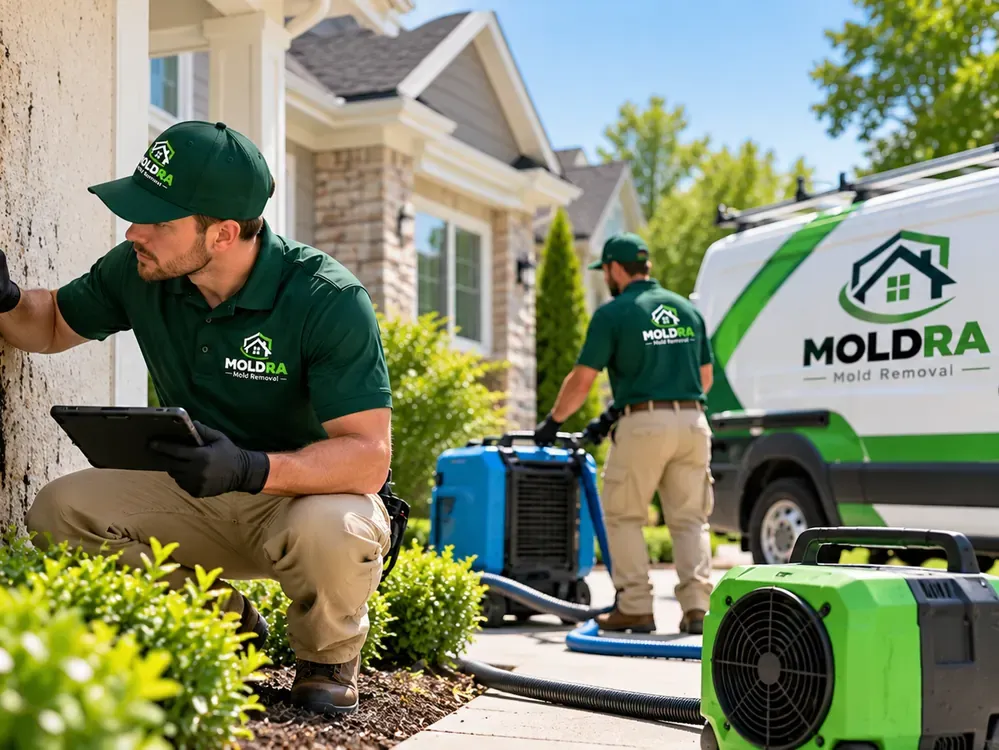
Serving Downtown Littleton from Littleton
Our office at 9800 W Cross Dr is about 15 minutes from Main Street.
Moldra 9800 W Cross Dr #110, Littleton, CO 80123 (720) 743-9257 Open in Google MapsFAQ
Mold removal in Downtown Littleton: questions
Do you work on historic homes in Downtown Littleton?
Yes. We remove only what has to go, protect original trim and floors where we can, and focus on drying the masonry and fixing the moisture source.
Can you handle mold in a Main Street shop or office?
Yes. We set up containment so the rest of the building can stay open, and we can work around business hours. See our commercial mold remediation service.
My old cellar always smells musty. Is that mold?
Often it is damp masonry plus some mold on stored items or wood. An inspection with moisture readings shows what is wet and whether removal, a dehumidifier or both are needed.