

Serving Columbine Valley, Colorado · Open 24/7
Mold Removal in Columbine Valley, CO
Moldra provides mold removal in Columbine Valley, CO, for the larger custom homes around the country club and near the South Platte River. Since 2012 our Littleton team has inspected, tested and removed mold in big finished basements, attics and bathrooms, and found the groundwater, irrigation or plumbing leaks behind it.
- Available 24/7
- Local Littleton team since 2012
- Clear written estimate before work starts
Get a fast estimate
Tell us what you are seeing. We call you back, 24/7.
Mold Remediation Columbine Valley
- Since 2012 14+ years in Littleton
- Open 24/7 A person answers day and night
- Local office W Cross Dr, Littleton, CO
- Source found first Moisture meters and thermal imaging
- HEPA & containment Negative air on every removal
- Clearance checked Lab testing when you need proof
Local know-how
Mold removal in Columbine Valley, CO: what we see
Columbine Valley is a small town in Arapahoe County, separate from the unincorporated Columbine neighborhoods to the west. It is built around Columbine Country Club and sits close to the South Platte River, with larger custom homes on generous lots.
Being near the river and a golf course means a lot of water in the ground. Lower lots can see higher groundwater in wet years, and irrigated lawns run right up to the house. Large homes with several bathrooms, wet bars and big HVAC systems give a leak many places to start.
Serving all of Columbine Valley
- Around Columbine Country Club
- Along S Platte Canyon Rd
- Near the South Platte River trail
- Near W Bowles Ave
- Close to Bow Mar
Columbine Valley is about 10 to 15 minutes from our office on W Cross Dr.
Mold problems in Columbine Valley homes
Groundwater near the river
Homes on lower ground near the South Platte can see damp basement slabs after wet springs.
Irrigation and landscaping
Sprinkler zones close to the foundation and long irrigation seasons keep soil wet against basement walls.
Large homes, long plumbing runs
More bathrooms, wet bars and ice makers mean more connections that can leak inside walls and ceilings.
HVAC and air quality
Large duct systems can spread musty odors through the whole house once mold starts in one area.
Why it matters
Why Columbine Valley homes need professional mold removal
Mold is a sign that water is reaching a part of your home it should not. These are the reasons Columbine Valley homeowners call us instead of trying a quick fix.
Groundwater
Lower lots near the river stay damp after wet springs.
Large HVAC systems
Drain pans and ducts can grow mold and spread odors.
Many fixtures
More bathrooms and bars mean more places to leak.
Discreet, careful work
Containment keeps the rest of your home clean.
Services in Columbine Valley
Most requested in Columbine Valley
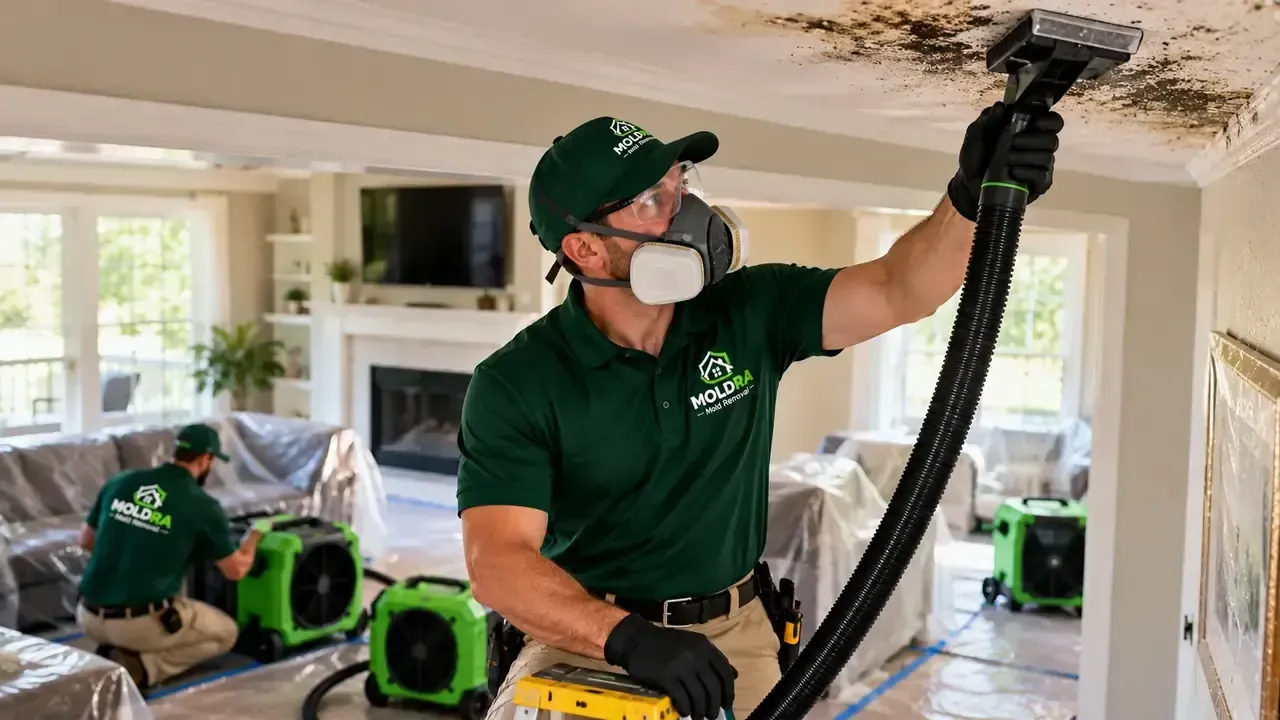
Mold Removal & Remediation
Full remediation, from inspection to clearance testing.
Learn more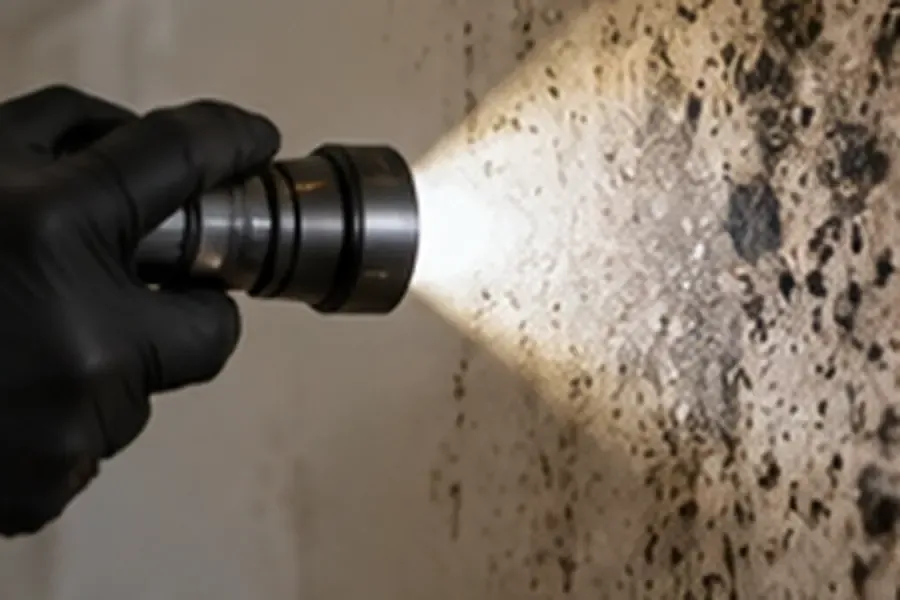
Inspection & Testing
Moisture mapping, thermal imaging, and air or swab samples analyzed by a lab.
Learn more
Air Quality Testing
Mold spores, humidity, particulates, VOCs and CO2 in one visit.
Learn more
Water Damage Restoration
Extraction, structural drying and mold prevention after leaks and floods.
Learn moreOur process
How we remove mold in Columbine Valley
Columbine Valley homes are larger custom homes near the South Platte and a golf course, so the process covers groundwater, irrigation and big HVAC systems.
-
Step 1: Inspection & assessment
We inspect your Columbine Valley home with moisture meters and thermal imaging to find visible and hidden mold and the water behind it. Air or swab samples are added when they answer a real question. You get a written scope before work starts.
-
Step 2: Containment & air filtration
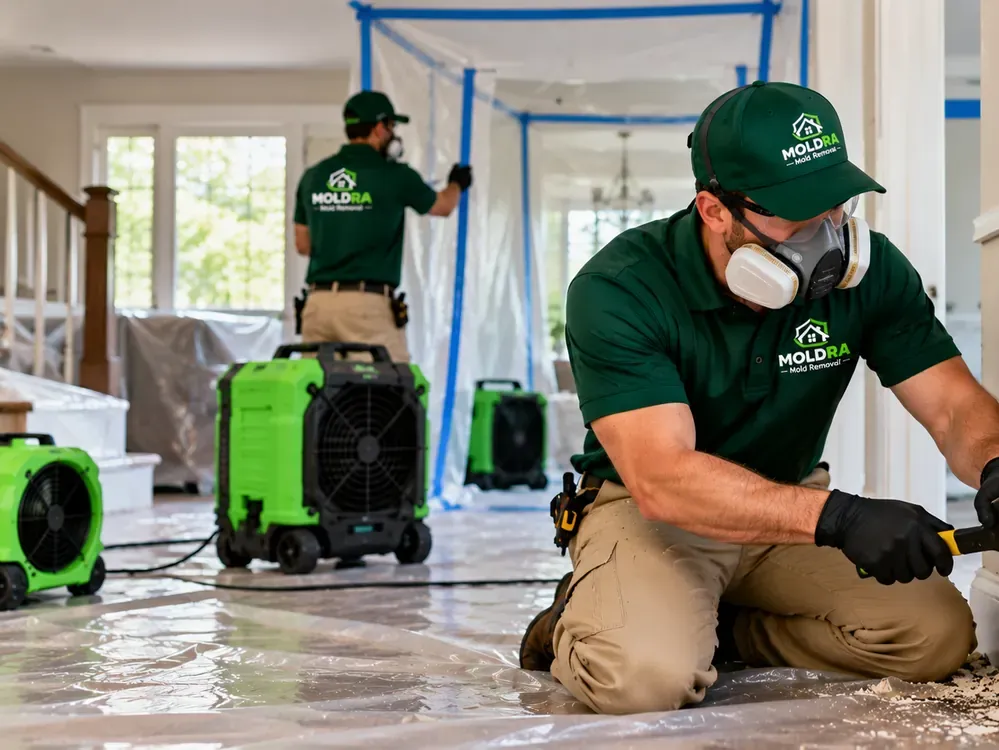
The work area is sealed with plastic barriers and a zipper door, and negative air machines with HEPA air scrubbers keep spores out of the rest of the house.
-
Step 3: Removal & treatment
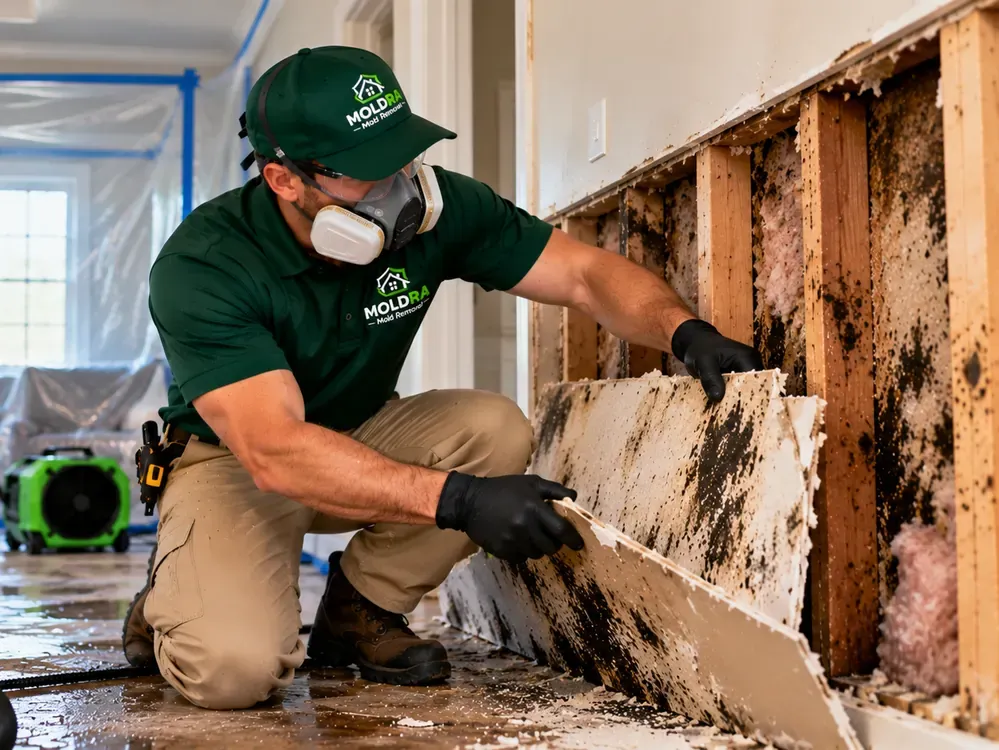
Moldy drywall, insulation, carpet and pad are removed and bagged inside containment. Framing and concrete are HEPA vacuumed, cleaned and treated with an antimicrobial.
-
Step 4: Structural drying & dehumidification
Dehumidifiers and air movers dry the structure, and we log readings until it is dry. With groundwater close to the surface on lower lots, we confirm concrete is dry before anything is rebuilt.
-
Step 5: Post-remediation verification
Before rebuilding, we confirm the area is clean, dry and back to normal, with clearance testing when you want lab proof.
-
Step 6: Prevention & restoration
We fix the moisture cause so the mold does not return. Typical fixes here are sump pump checks and backups, irrigation adjustments and HVAC drain pan maintenance.
Local know-how
Understanding mold in Columbine Valley, Colorado
Every neighborhood has its own mix of terrain, home ages and water problems. Here is what drives mold in Columbine Valley.
Near the river
Columbine Valley is a small town in Arapahoe County built around Columbine Country Club, close to the South Platte River. Lower lots can see higher groundwater in wet years.
Larger custom homes
Generous lots, irrigated lawns and big homes with several bathrooms, wet bars and large HVAC systems give a leak many places to start.
What that means for mold
We often find mold in lower levels after seepage, around wet bars and bathrooms, and in HVAC drain pans and ducts.
Health and the climate
Littleton gets only about 16 inches of precipitation and about 66 inches of snow in a typical year (Western Regional Climate Center data), and the air is dry most of the time. So mold here almost always traces back to one water source. The CDC notes damp, moldy rooms can cause stuffy nose, wheezing and eye or skin irritation, with stronger reactions for people with asthma or allergies.
Nearby, we also serve Bow Mar, Columbine Knolls and Downtown Littleton.
From our blog
Mold guides for Littleton homeowners
Plain-English answers from our team about spotting mold, testing and what removal involves.
-
 Signs & causes
Why Littleton Homes Get Mold (Even in a Dry Climate)
Colorado is dry, so why do Littleton homes get mold? Snowmelt, storms, finished basements, swamp coolers and frozen pipes. The local causes and how to prevent them.
Read the guide -
 Inspection & testing
Is Mold Testing Worth It? When to Test and When to Skip It
When professional mold testing is worth the money, when it is not, how air and swab tests work, and why DIY kits are misleading. Honest advice from Littleton mold pros.
Read the guide -
 Signs & causes
7 Signs of Mold in Your Home (and Where It Hides)
The first signs of mold in a house: musty smells, stains, peeling paint, allergy symptoms and more. Where hidden mold grows in Littleton homes and what to do.
Read the guide
Service areas
We serve these areas in Littleton, CO
From our office on W Cross Dr we cover all of Littleton and the neighborhoods around it. Pick your area to see the mold problems we see there most.
- Littleton
- Downtown Littleton
- Southwest Littleton
- Ken Caryl
- Dakota Ridge
- Columbine
- Columbine Knolls
- Columbine Valley
- Bow Mar
- Marston Lake
- Chatfield
- Roxborough
- Sterling Ranch
Talk to a mold specialist near Columbine Valley.
Tell us what you are seeing. We will explain the next step, whether that is a test, an inspection or removal.
- Available 24/7
- Local Littleton team since 2012
- Clear written estimate before work starts
Location
Serving Columbine Valley from Littleton
Columbine Valley is about 10 to 15 minutes from our office on W Cross Dr.
Moldra 9800 W Cross Dr #110, Littleton, CO 80123 (720) 743-9257 Open in Google MapsFAQ
Mold removal in Columbine Valley: questions
Is Columbine Valley different from Columbine?
Yes. Columbine Valley is its own small town in Arapahoe County. The wider Columbine area is mostly unincorporated Jefferson County. We serve both.
Can you work discreetly?
Yes. We can schedule around your plans, keep containment to the affected room and explain the work to you before anything is removed.
Does whole-house air quality testing make sense in a large home?
If you notice a musty smell in several rooms, it can. Testing at a few points shows whether the problem is in one area or spreading through the HVAC system.